By LinkMind Foundation
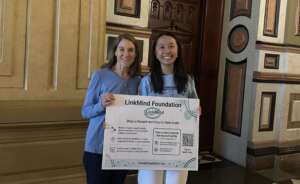
Five members of LinkMind stood on suburban streets across six states, clipboards in hand, hearts pounding. Rana in Richmond, Civa in Washington D.C., Cathy in Cincinnati, Claire in Charlottesville, Charles in New York City and Ivy in Bethesda. They had a simple but ambitious goal: talk to real people about energy programs nobody seemed to understand.
The planning had taken weeks. Maps spread across bedroom floors, demographic data printed and highlighted, routes carefully plotted through neighborhoods that ranged from million-dollar mansions to working-class apartment complexes. They needed diversity—income levels, housing types, heating systems, ages. Every variable mattered.
The First Door
That first Saturday morning in November felt like stepping off a cliff. Everyone had practiced their introduction dozens of times, but standing before an actual door changed everything. Rana approached a blue door, solar panels glinting on the roof, a vegetable garden suggesting environmental consciousness.
“Good morning,” she began when a woman in her fifties answered, coffee mug in hand. “We’re high school students conducting research on energy efficiency programs. Could we ask you a few questions?”
The woman paused—that crucial moment when curiosity battles suspicion. “You’re… students? Doing real research?”
Twenty-three minutes later, they had their first completed survey and something more valuable: proof that people wanted to talk. The homeowner invited them onto her porch, brought hot chocolate, shared stories about solar panels that were “the best investment we ever made” and heat pump rebates she’d tried to navigate for six months before giving up.
“The website made no sense,” she explained. “I called four times, got transferred each time, finally someone told me to talk to my contractor first. But my contractor had never heard of the program.”
The Democracy of Rejection
But for every welcome, came multiple rejections. Doors slammed before they could finish their introduction. “Not today, kids. Whatever you’re selling, not today.” Curtains twitched, but no one answered. Polite but firm voices through screen doors: “I don’t discuss my bills with strangers.”
In Bethesda, a businessman looked at their clipboards and shook his head. “Nothing personal, but I don’t have time for surveys.” In Fairfax, a retiree asked suspiciously if they were “working for the government.” An apartment building superintendent told them solicitation wasn’t allowed, even when they explained they weren’t selling anything.
Civa learned to recognize the signs: the quick peek through blinds followed by silence, the automatic “no thank you” before doors closed, the wariness that came from too many uninvited sales pitches. In their research journals—spiral notebooks carried alongside official data sheets—they began cataloging rejections as carefully as acceptances.
“Rejection is data too,” Ivy wrote one evening after a particularly difficult day. “It tells us about trust, about who people think deserves to ask questions.”
Unexpected Conversations
But then there were doors that opened wide, conversations that sprawled across front porches and kitchen tables. A contractor in Fairfax not only completed their survey but spent an hour explaining the bureaucratic maze of rebate programs. “You want to know the real problem?” he asked, spreading paperwork across his truck’s tailgate. “Nobody talks to each other. Utilities say one thing, manufacturers say another, government websites say something completely different.”
An elderly woman in Rockville made them tea and showed her stack of rebate forms—”evidence,” she called it—documenting three attempts to get appliance rebates. One had succeeded, two had failed for reasons no one could explain. A young couple in a D.C. rowhouse desperately wanted to make energy improvements but discovered they weren’t eligible for any programs as renters. “We want to do the right thing,” the woman said, bouncing a toddler. “We just don’t know how.”
These conversations stretched beyond survey questions. People shared frustrations about confusing websites, contradictory information, programs that promised savings but delivered paperwork nightmares. They offered water, coffee, snacks. They asked about the students’ schools, their college plans, whether this research would actually make a difference.
Finding the Rhythm
By December, the four had developed their methodology through trial and error. Saturday mornings worked best—people were home but not hurried. Professional dress but not formal. Clipboards looked official, but leading with “We’re students” opened doors that “We’re researchers” might not.
Cathy developed an intuition for reading houses before knocking. Solar panels suggested environmental consciousness. Multiple cars hinted at disposable income. Well-maintained gardens spoke of people who invested in long-term improvements. “Every house tells a story before anyone opens the door,” she noted.
They learned to work in pairs for safety and efficiency, splitting up to cover ground but reconvening to compare notes. The most valuable insights often came not from formal survey responses but from tangential conversations—stories about neighbors, contractors, the byzantine maze of application processes.
In Cincinnati, Cathy discovered three houses on the same block with completely different experiences with identical rebate programs. The first household received their rebate in six weeks. The second had been waiting four months. The third gave up after two rejections for technical reasons no one could explain.
“That’s when I realized we weren’t just collecting individual responses,” Cathy reflected. “We were mapping an entire ecosystem of confusion and success, finding patterns nobody had bothered to look for.”
The Magic Number: 75%
The statistic that would define their research—75% interested in future participation—emerged not from analysis but from human connection. Three-quarters of respondents, regardless of previous experiences, said some version of: “Let me know what you find out.”
“Will you really come back with results?” asked a retired teacher, carefully writing her email address on their survey form. “I want to know if other people have the same problems we do,” said a young father. “You kids are doing something important,” declared an engineer who’d tried unsuccessfully to navigate three different rebate programs. “Someone needs to figure out why this is all so complicated.”
Again and again, people asked to be included in findings. They wanted updates, wanted to know what patterns emerged, wanted to be part of solutions rather than just survey subjects. The 75% wasn’t just a statistic—it was a mandate from their community.
From Stories to Science
Back home, laptops open on kitchen tables and bedroom desks, the four began transforming human stories into statistical analysis. But the numbers never lost their human faces. When Rana input “Property value: $850,000,” she remembered solar panels and coffee-cup warmth. When Cathy coded “Heat pump: No,” she thought of explanations about why installations were complicated for older homes.
The regression analysis that would identify five significant predictors—property value, heat pump ownership, heating system type, time constraints, and contractor knowledge—was built from 220 individual conversations, 220 moments of human connection, 220 decisions by strangers to trust four teenagers with their stories.
The Weight of Publication
Months later, when the acceptance email from Curieux Academic Journal arrived, they thought not of academic achievement but of promises made on doorsteps. The publication was validation, but also responsibility. They had promised to return with answers, to use what they learned to make things better.
“We didn’t just collect data,” they wrote in their acknowledgments. “We collected trust. Now we have to prove worthy of it.”
Today, LinkMind Foundation continues growing, but its foundation remains those conversations on front porches and in doorways. The research has attracted attention from policymakers and energy companies, but its real success is measured differently: the 75% who wanted to hear more, conversations that continued long after surveys ended, recognition that effective policy starts with listening to people it’s meant to serve.
Those 220 conversations became groundbreaking research, published findings, and policy recommendations. More importantly, they proved something simple but profound: when young people show up with genuine questions and open hearts, communities respond with wisdom, stories, and hope for change.